

Example of Furniture Delivery Job Explained

If you have ever bought a sofa online, picked up a wardrobe from a shop, or needed a table moved from one address to another, you have already come across an example of furniture delivery job in real life. On paper it sounds simple - collect the item, load it, drive it over, unload it. In practice, a proper furniture delivery job involves timing, access checks, safe lifting, vehicle planning and clear communication so the customer is not left guessing.
For most people, the question is not what the job is called. The real question is what the service actually includes, what can go wrong, and what a reliable local mover should do to keep things straightforward. That matters whether you are moving one armchair across town or arranging regular deliveries for a business.
What is an example of furniture delivery job?
A furniture delivery job usually means collecting one or more furniture items from one location and transporting them safely to another. That could be a bed from a retailer, a second-hand dining set from a private seller, or office furniture being moved between units. The work may sound basic, but the details make the difference between a smooth delivery and a stressful one.
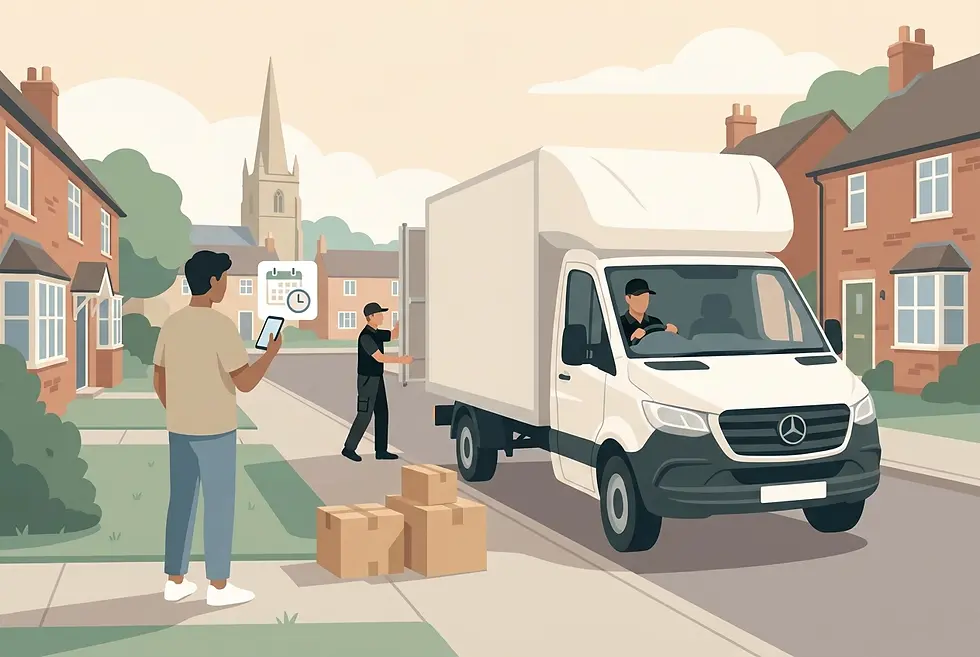
A simple example would be this. A customer in Braintree buys a three-seater sofa from a seller in Colchester. The sofa needs collecting from a ground-floor house and delivering to a first-floor flat. Before the job starts, the mover confirms the item size, checks whether there are stairs, asks about parking at both ends and agrees a time slot. On the day, the sofa is protected, loaded securely into the van, transported carefully and carried into the correct room at the delivery address.
That is a straightforward furniture delivery job, but it still needs planning. A large item can be awkward to turn through hallways. Parking restrictions can cause delays. A delivery address may have narrow stairs or a shared entrance. Good service means these things are considered before the van sets off, not after it arrives.
What a furniture delivery job normally involves
Most furniture deliveries follow the same broad pattern, even if the item or distance changes. First comes the collection. That means arriving on time, checking the item condition, confirming the right pieces are present and lifting them safely into the vehicle. Larger items may need blankets, straps or careful positioning to stop movement in transit.
The journey itself is only one part of the work. Safe driving matters, of course, but so does route planning. If access roads are tight, if school-run traffic is likely, or if town-centre unloading is restricted at certain times, those details need factoring in. A local mover often has an advantage here because they know which roads get busy and which addresses are harder to reach.
Then comes delivery. That is where customers usually judge the service. Was the arrival time clear? Were the item and property handled with care? Was the furniture taken where it needed to go rather than left at the doorstep? A dependable service keeps the process calm and practical from start to finish.
An example of furniture delivery job from start to finish
Let us take a more detailed example of furniture delivery job so you can see what is involved.
A couple moving into a house in Halstead buy several items from different places in the same week: a chest of drawers from a furniture outlet, a dining table from a private seller and two bedside cabinets from a family member. They do not need a full removals service, but they do need everything brought together safely and on time.
The job starts with a proper conversation. The mover asks for the collection postcodes, delivery postcode, item sizes and whether help is available at either end. Photos are often useful because they give a clearer idea of bulk, shape and whether the pieces are likely to fit through doors without difficulty.
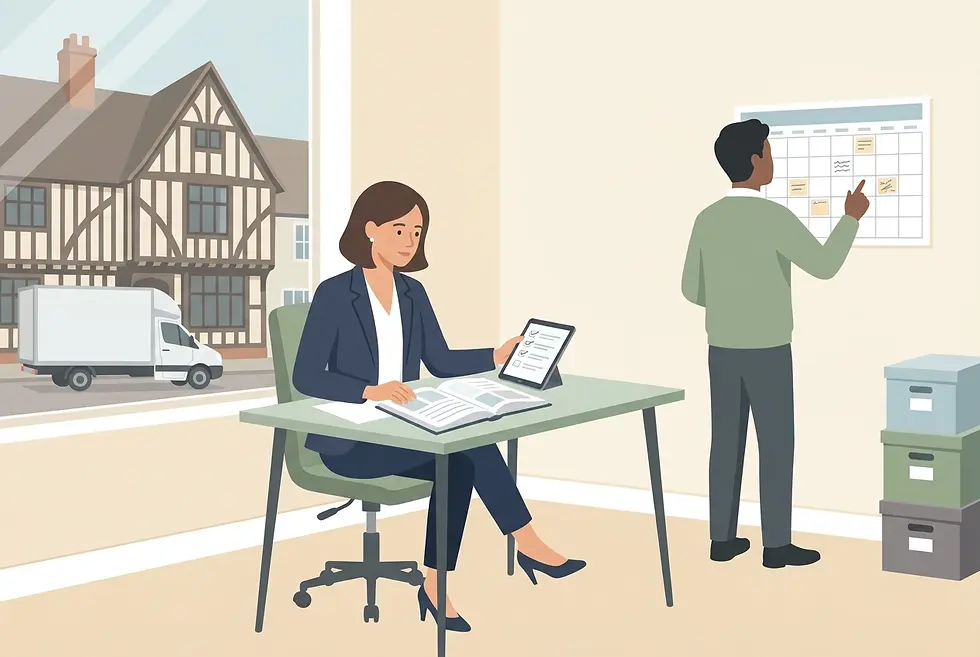
Next comes scheduling. If one seller is only available in the morning and another after lunch, the route has to be organised sensibly. There is no benefit in promising unrealistic time slots and then turning up late. Straightforward communication is part of the service.
On the day, the van is loaded in order. Heavier or bulkier furniture is secured first, with smaller items positioned so they do not shift or get marked. The driver checks access at the delivery address before unloading. If the table has detachable legs, that may make carrying easier. If the chest of drawers is solid wood and particularly heavy, two-person handling may be the safer option.
When everything arrives, the customer can see the value of proper planning. There is less back-and-forth, less risk of damage and less stress trying to coordinate multiple collections personally. What looked like a few simple pickups is actually a job that benefits from experience.
Why furniture delivery is not just "man with a van"
People often use the phrase casually, but furniture transport is not only about having a van and some spare time. It is about handling awkward, valuable and often bulky items in a way that protects both the furniture and the property.
That includes knowing how to lift without causing injury, how to secure a load so it does not move in transit, and how to judge whether an item will fit through a doorway or up a staircase before forcing the issue. It also means being realistic. Some jobs are quick single-item collections. Others need more time because access is poor or the furniture is unusually large.
This is where customers benefit from choosing a business that is organised and insured, rather than relying on guesswork. Cheap can look attractive at first, but if the service is vague on arrival times, handling, or what happens if there is an issue, that bargain may not feel like one for long.
What customers should check before booking
If you are arranging a furniture delivery, it helps to give clear information early. The more accurate the details, the smoother the job tends to be. Item dimensions matter, especially for beds, wardrobes, sofas and dining tables. So does access. A narrow cottage staircase in Castle Hedingham is a very different job from carrying a chair into a ground-floor property with driveway parking.
You should also check what is included in the quote. Some deliveries are door-to-door only, while others include room placement. It is better to confirm this upfront than make assumptions. Timing matters too. If you are collecting from a shop or seller with limited availability, mention that at the start.
Photos are one of the simplest ways to avoid misunderstandings. A brief message saying "large corner sofa" does not always tell the full story. A quick image can show shape, scale and whether the item comes apart.
Common issues that affect furniture delivery jobs
The biggest problems are usually not dramatic. They are the small details people overlook. Measurements are a common one. A wardrobe may fit in the van but not through the front door. A seller may describe a table as "light" when it is actually solid oak. A flat may have no lift, even though the customer assumed it did.
Delays can also happen if collection times are loose or parking is difficult. That does not always mean the mover is at fault. It simply means furniture delivery has moving parts, and a good service allows for that with sensible planning and honest updates.
Weather can play a part as well. Rain does not stop deliveries, but it does mean extra care is needed when loading and unloading upholstered items or moving through wet entrances. Again, this is where experience shows.
When a local delivery service makes the most sense
A local service is often the right fit when you want direct communication, flexible booking and practical help without overcomplicating the job. That applies to homeowners collecting shop purchases, tenants moving larger items between properties, landlords furnishing a rental, or small businesses relocating desks, chairs or storage units.
It can also be the best option when the job is too much for a car but not large enough for a full house removal. That middle ground is where a lot of furniture delivery work sits. One sofa. A few pieces for a new flat. A shop collection that needs to happen at a set time. These are ordinary jobs, but they still need to be done properly.
For customers across Essex, that usually means looking for someone who knows the area, turns up when agreed and keeps pricing clear. JTJ Removals fits that sort of job because the service is built around practical moving help rather than making a straightforward delivery sound more complicated than it is.
The real value of a proper furniture delivery job
A good furniture delivery is easy to underestimate because, when it goes well, it feels simple. The item arrives safely, on time and without damage to walls, door frames or flooring. The customer gets on with their day. That is exactly the point.
So if you are looking at an example of furniture delivery job, do not judge it only by the distance between collection and drop-off. Judge it by the planning, care and reliability behind it. The best delivery service is the one that treats a single item with the same attention it would give a larger move - because to the customer, that piece of furniture still matters.

Comments