
What Size Van for Moving House?

You usually realise the van is too small when the sofa is halfway in, the mattress is leaning against a wall, and someone says, "We might need another trip." If you are wondering what size van for moving house, the right answer depends less on square footage alone and more on how much furniture you actually have, how well it is packed, and whether you want one trip or are happy to do two.
Getting the size right matters for more than convenience. Too small, and the day drags on with repeat journeys, extra fuel, and more lifting. Too big, and you can end up paying for space you do not need, while also driving something harder to manoeuvre down tight residential roads or into awkward parking spots.
What size van for moving house depends on the move itself
A one-bed flat can sometimes fit into a medium van, but not always. A two-bed house might go in a large van if the contents are fairly light, but a heavily furnished home can need more room than expected. The mistake people make is assuming the number of bedrooms tells the whole story.
What really changes the van size is the mix of items. White goods, wardrobes, bed frames, sofas, dining tables and garden furniture take up space quickly. Boxes can be stacked efficiently, but bulky furniture creates awkward gaps, and those gaps are where van space disappears.
Access also matters. If the van cannot park close to the property, loading takes longer and multiple trips become far less appealing. In towns and villages around Essex, where parking and narrow roads can be a factor, choosing a van that suits both the load and the route makes the day much easier.
A simple guide to common van sizes
For most house moves, people are looking at three practical options: medium, large, and Luton van. Small vans are useful for single items or very light moves, but they are rarely the right choice for a full house move.
Medium van
A medium van is often suitable for a small flat, a student-style move, or a partial move where there is not much furniture. Think boxes, bags, a mattress, a small desk, and a few smaller pieces of furniture. It can work well if you are moving from a furnished rental and only taking your own belongings.
Where it falls short is with larger household items. Add a washing machine, fridge freezer, sofa, chest of drawers and a double bed, and space runs out fast. If you are relying on a medium van for a full home move, you need to be realistic about whether you are prepared for more than one trip.
Large van
A large van is often the middle ground people need. It suits many one to two-bedroom moves and gives more flexibility for larger furniture. If you have the usual mix of boxes, beds, a sofa, dining set and appliances, a large van may be enough, especially if the load is planned carefully.
This is often the most cost-effective option for smaller house moves because it balances capacity with easier driving and parking. Still, it has limits. If your home is well furnished, or you have extra storage items, bikes, outdoor furniture or lots of children’s equipment, it can become tight.
Luton van
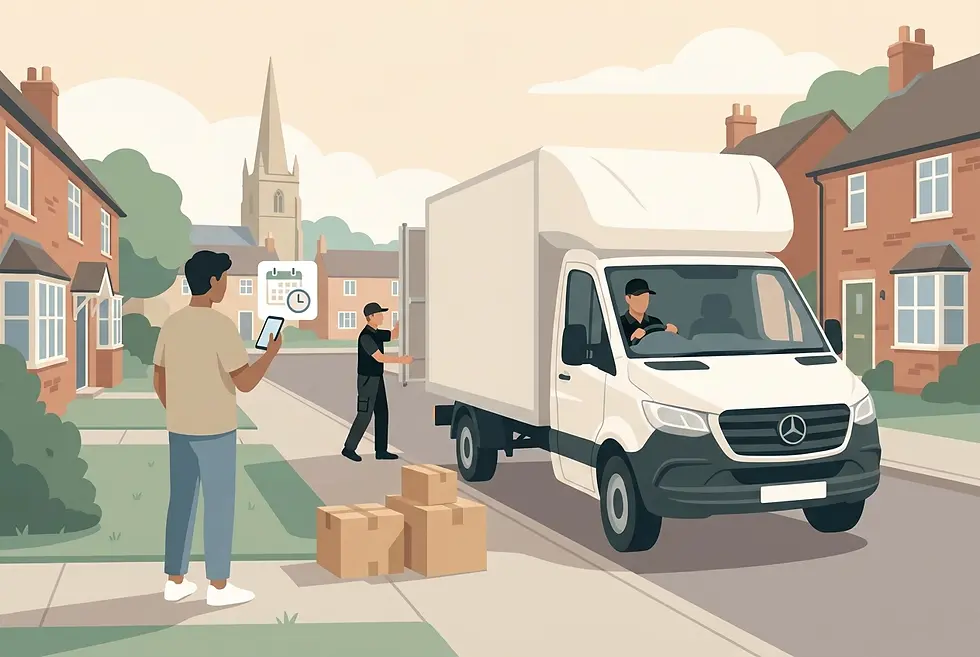
For full house removals, the Luton van is often the safest choice. Its box shape makes it much better for stacking and loading efficiently than a standard panel van. You are not losing as much space to curved sides or awkward rooflines, which means bulky household items fit more sensibly.
A Luton is commonly the right option for two to three-bedroom homes, and sometimes even larger moves depending on volume. If your aim is to get everything done in one journey where possible, this is often the van that makes it happen. It is especially useful when time is tight, access is limited, or you are moving a longer distance and do not want the cost and hassle of repeat runs.
Matching van size to property size
Property size is not a perfect measure, but it is still a useful starting point.
A bedsit or small one-bed flat with minimal furniture may fit in a medium van. A typical one-bed flat or small two-bed flat often suits a large van. A furnished two-bed house or flat is more likely to need a Luton, particularly if you want one trip. A three-bed house nearly always points towards a Luton van or a more structured removals setup.
The key phrase is usually. People moving from newer homes with built-in storage may have fewer freestanding items. Others have loft contents, sheds, spare-room furniture and years of accumulated belongings. Two homes with the same number of bedrooms can be completely different in van terms.
Furniture is what changes everything
Boxes are straightforward. Furniture is where planning matters.
Sofas are one of the biggest deciding factors, especially corner sofas or larger three-seaters. Mattresses and bed frames take up length. Wardrobes, tall shelving units and American-style fridge freezers can limit how efficiently the van is loaded. Even if the volume looks manageable on paper, awkward shapes can make the load harder to secure and stack.
This is why a van that sounds generous can still end up full early. A proper size estimate needs to consider not just how much you own, but the shape and size of the largest items. If you are moving several bulky pieces, it is often better to size up rather than hope they will all slot in neatly on the day.
One trip or multiple trips?
This is the question that often settles it.
If you are moving locally and do not mind doing two runs, a smaller van might be a reasonable way to save money. That can work well when both properties are close together and access is easy. For a short move across town, the extra time may be acceptable.
If the move is across county lines, into a busy area, or on a tight timescale, one trip usually makes more sense. Repeat journeys mean more loading and unloading, more fuel, more travel time and more fatigue. They also increase the chance of delays if you are working around key collection times, parking restrictions or lift access in flats.
In practice, people often underestimate how tiring the second run feels. What sounds manageable at 8am can feel very different by mid-afternoon.
Why going too small can cost more
Hiring a smaller van can look cheaper at first, but it is not always the cheaper move overall. If the van is too small, you may need extra hours, extra mileage or even a second booking. There is also the physical cost of handling the same items more times than necessary.
A van that fits the move properly helps the day run to plan. That matters if you are collecting keys, working around school runs, or trying to avoid a late finish. Saving a little on van size is not much use if it creates a rushed, stressful day.
When it makes sense to ask a removals company
If you are unsure what size van for moving house, getting advice from a local removals company can save a lot of guesswork. A quick description of the property and the main furniture items is often enough to point you in the right direction.
This is especially useful if you are moving from an older property with difficult access, a flat with stairs, or a family home where the contents have built up over time. A local team will usually have a better feel for what works in real conditions, not just in ideal ones. For example, a move in places like Halstead or Colchester may involve very different parking and access considerations depending on the street.
JTJ Removals handles everything from smaller van jobs to full house removals, which means the advice tends to be based on what actually fits and what keeps the move efficient, not just what sounds about right.
A quick way to judge your likely van size
If you have only personal belongings, a few boxes, and limited furniture, start by thinking medium van. If you have a normal amount of household furniture for a one to two-bed property, think large van. If you have full rooms of furniture, appliances, lots of boxes, or you want the best chance of one trip, think Luton van.
It is usually better to be slightly generous with space than slightly short. Extra room gives more flexibility for safe loading and helps avoid forcing items into the van in a way that risks damage.
The best van size is the one that matches your actual contents, your route, and the kind of moving day you want. If you are not sure, do not guess based on bedrooms alone - think about the furniture, the access, and whether you really want to be loading the same van twice by the end of the day.


Comments