
What Happens on Moving Day? A Castle Hedingham Guide

Moving day can feel like a big unknown, especially if you have never hired a removal crew before. You might picture chaos, boxes everywhere, and wondering whether you packed the kettle. The truth is much calmer when you know the order of events. This guide to house removals near me in Castle Hedingham walks you through exactly what happens from the moment the van pulls up to the final item being placed in your new home.
We will cover your pre-arrival checklist, the first 20 minutes on site, the walkthrough, loading, transit, unloading, final checks and payment. You will also learn how to choose reliable removal companies near you in Castle Hedingham, pick up simple tips to keep the day running smoothly, and get answers to common moving day FAQs. If you are a first-time mover, think of this as your friendly roadmap. By the end, you will know what to expect, what to prepare, and how to feel confident when the crew arrives.
Before the Van Arrives: Your Pre-Arrival Checklist
The night before, confirm the arrival window, crew size, and a contact number with your removal company. Ask whether the quote covers materials or just labour, and get it in writing. Clear a route inside and out: move cars off the driveway, clear bins from the front path, and unlock side gates. Finish packing the things crews cannot take, such as jewellery, passports, prescription medicine, pet food, and important documents. Anything you need in the first 24 hours goes in a labelled 'open first' box. Check access at both ends. In older parts of Castle Hedingham, and nearby Braintree and Halstead, narrow lanes and on-street parking can change how close the van gets, so tell your mover about tight spots before the day. Settle payment logistics in advance. JTJ Removals accepts cash, bank transfer, or card, so decide and have it ready. If someone else is paying or letting the crew in, brief them the night before. For a sanity check, revisit BAR's 'Moving in the UK' guidance. For a deeper pre-move checklist, see our guide on what to prepare before moving day.
The Van Arrives: What Happens in the First 20 Minutes
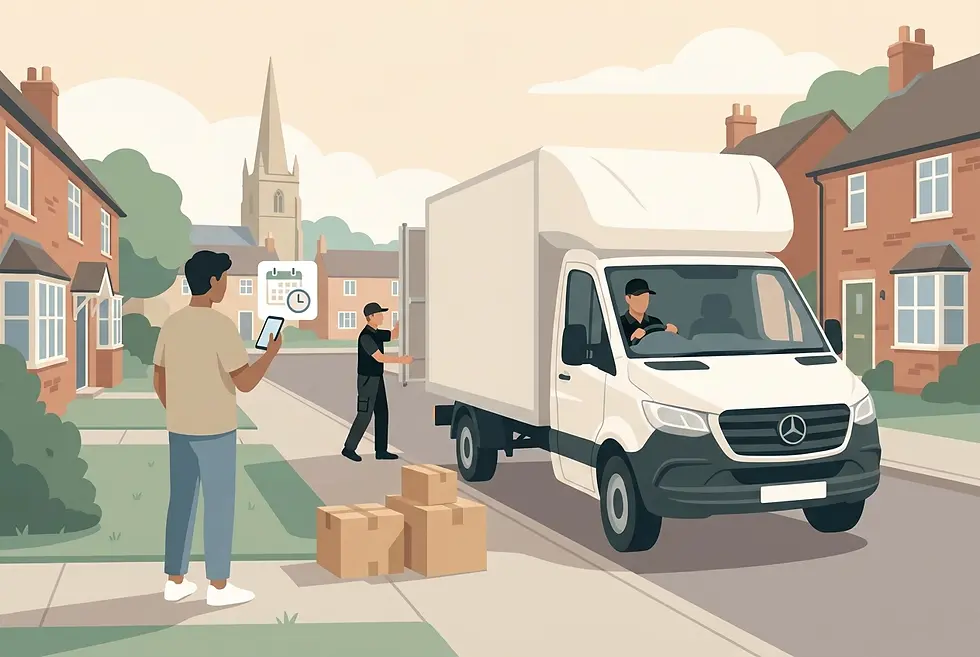
Once the van pulls up, don't expect an instant start. The crew parks as close as access allows, then spends five to ten minutes assessing the load before lifting a single item. Understanding how to load the van in the right order makes that pause feel less like waiting.
The crew leader introduces themselves and confirms what is going, what is staying, and anything fragile or awkward. Flag last-minute changes now.
The van may look bigger or smaller than you pictured. Vehicles are chosen around volume and access, so a tight Castle Hedingham street may mean two trips.
Ask about shoes, floors, and pets. Most professional crews follow a house rule on protecting flooring and keeping doors shut, and agreeing it upfront prevents niggles later.
If your home removals include packing, the crew confirms which rooms are packed and which are yours. Unpacked cupboards and drawers slow the day more than almost anything else.
With that confirmed, the walkthrough and protection stage begins.
The Walkthrough and Protecting Your Property
With house rules agreed, the crew leader walks the route with you: front door, stairs, tight corners, and the drop-off point at the new property. Two minutes here prevents damaged doorframes later. Protection comes next. Professional movers use floor coverings, door protectors, and moving blankets to shield walls and stairwells, especially in period properties where narrow turns and original plaster are unforgiving. Our Moving Process explains this stage in more detail. Point out anything with sentimental or unusual value, from a piano to a glass display cabinet. A good crew plans its lifting approach around those items rather than discovering them mid-load. Confirm loading order: heavy items and large furniture go in first, and the last things loaded are often the first out, which matters if you need beds or white goods early. If unsure what a mover should do here, BAR's Consumer Code of Practice has held Approved Code status since 2008 and is audited by the Chartered Trading Standards Institute. Verify membership via the Approved Code directory.
Loading the Van: Packing, Lifting and Securing
With the route agreed, wrapping starts. Sofas, mattresses, and case goods go into moving blankets first, then onto trolleys where the ground allows. Slower than carrying, but it saves furniture and doorways from scrapes. See our guide to loading a sofa into a van.
Loading is a jigsaw, not a queue. Crews stack from the floor up, tallest and heaviest items as the structural layer, then boxed goods fill the gaps so nothing shifts. HSE guidance requires everything in a vehicle to be secured. Straps and bracing stop movement under braking and cornering, which matters on the A-roads and lanes around Halstead and Braintree.
Expect extras: wardrobe boxes for hanging clothes, mattress bags, and specialist handling for anything unusually heavy or oversized. A man with a van hire may treat these differently.
As rooms empty, keep walking the house. Crews sweep, but a second pair of eyes catches the box in the loft hatch, the plant pot round the back, or garden furniture nobody mentioned.
Booked single item or bulky item transport rather than a full move? It compresses to assess, wrap, secure, go, often within the hour.
During Transit: What You Do While the Crew Drives
Once the doors are shut and the van pulls away, your job goes quiet for a while. Nothing is expected of you in transit. Most customers either head to the new property ahead of the crew or follow the van, and either works as long as the crew knows where you will be when they arrive.
If you are travelling separately, keep your phone on. Traffic on the A131 or through Braintree can add time, and a quick message about a delay beats the crew waiting in the road for you.
Use the gap productively. Pick up keys, drop pets at a friend's house, or grab food, because once unloading starts you will be directing placement rather than running errands. For longer county-wide moves across Essex, ask whether the crew plans a break and roughly when they expect to reach the new address, so you are not waiting outside with no idea of timing.
Leave the van doors alone. Never open or rearrange a loaded van in transit; a shifted load or unstrapped item can cause damage or injury.
If you have booked a man with a van service just for you, the same rules apply, just with a smaller load.
Unloading and Placing Everything in the Right Room
Unloading reverses the loading order, but placement is not automatic. Decide where beds, wardrobes, and sofas go before the van doors open, not while someone is balancing a wardrobe on the stairs.
Be specific and be available. "Sofa in the front room" beats "just put it somewhere," and standing at the top of the stairs pointing is far quicker than shouting from the kitchen.
Boxes tend to land in whichever room the label names. Vague labels mean everything ends up in the hallway, so station yourself at the door and direct traffic if you want a different result.
Protection comes down last, not first. Floor coverings and door protectors usually stay until the final heavy item is placed, so an empty-looking van does not mean the job is nearly finished.
Check items as they come in. A scuffed mirror or lamp is far easier to resolve while the crew is still on site than a week later.
Booked furniture delivery only? This stage is short: the item is carried to the room you specify, unwrapped if agreed, and the crew then leaves.
Final Checks, Payment and Handover
Once the last box lands, the final 20 minutes matter as much as the first. Walk both properties with the crew leader before they leave. At the old home, check cupboards, lofts, sheds, and garages for anything left behind. At the new one, confirm every box made it in.
Next, check the final invoice against your written quote. Extra hours, materials, or a second trip can change the price, but ask why before you pay.
Pay however suits you. JTJ Removals accepts cash, bank transfer, or card, so no special cash trip.
If something looks damaged, ask how to raise a claim. Professional movers have a documented process, and BAR publishes guidance on what to do if something goes wrong, worth reading before you need it.
Finally, take the crew's details and a receipt. If you need a return visit for a forgotten item or a furniture delivery follow-up, knowing who to call saves frustration.
Choosing Removal Companies Near You in Castle Hedingham
Avoid a stressful handover by choosing the right firm first. Search removal companies near me and you'll find national brokers plus genuine local operators. The difference shows on moving day: a crew that knows Castle Hedingham's narrow streets works faster.
Ask three questions before booking house removals: Are you insured? Who is actually turning up? What is excluded from the quote? Vague answers mean look elsewhere. Check trade-body membership too. BAR calls itself the recognised voice of the professional moving and storage industry in the UK. Its members are inspected on premises, vehicles, staff, procedures, contracts, and insurance, with 354 listed in the Approved Code scheme.
Match the service to the job. A full house move, man with a van hire, furniture delivery, and single item transport are different products with different pricing. Be clear what you need before comparing quotes.
Look for basic kit: moving blankets, trolleys, and securing straps protect furniture and homes. A firm without them is improvising. Local knowledge matters. A Castle Hedingham based firm like JTJ Removals covers Braintree and Halstead, so arrival times are realistic and narrow streets hold fewer surprises. For a closer look at local moving services with JTJ Removals in Castle Hedingham, see their blog.
Be sceptical of "cheapest" and "best". Insurance, written quotes, equipment, and clear payment terms are verifiable.
Tips to Keep Moving Day Running Smoothly
Once your mover is booked, a few small decisions make the biggest difference.
Book the earliest slot you can manage. An 8am start leaves room to absorb delays; a crew arriving at 2pm with a full house to load has no slack.
Label boxes by room and priority, not just contents. "Kitchen, open first" saves hunting through twelve identical cartons for the kettle on your first night.
Arrange for children and pets to be elsewhere. A friend's house or a nearby park is safer and noticeably quicker, especially during loading when doors are open and heavy items are moving.
Put out drinks and snacks. Moving is physical work, and a crew that is looked after tends to look after your belongings.
Photograph anything valuable or already damaged before the van arrives. Two minutes now gives you a clear record if a question comes up later.
Expect the day to feel slower than it looks. Wrapping, carrying and securing take time, with genuine quiet periods in between. Plan for a full day, not a couple of hours.
FAQs About Moving Day in Castle Hedingham
Even with those tips, a few questions always come up.
How long does a house move take? A two to three bedroom local home usually takes most of a day; longer Essex moves or heavily packed properties can run into two days.
Do I need to empty drawers and cupboards? Lightly loaded drawers can often stay if furniture is sturdy, but heavy or fragile contents should be packed. Always ask your mover first.
Will the crew take apart and reassemble furniture? Many dismantle beds and flat-pack items, but it is not universal. Confirm it in writing when you book.
What if it rains? Professional movers work in most weather and protect floors indoors. Extreme conditions can affect timing. Have a towel and clear path ready.
Should I tip the crew? Tipping is optional and never expected, but it is common and appreciated after a long day, especially if the crew handled awkward items well.
Can I ride in the van? No. Insurance and safety rules mean passengers cannot travel in a loaded removal van. Arrange your own transport.
Moving Day, Demystified
That covers the worries. The bigger fear is not knowing what happens next. Once you see the sequence, from the van reversing onto the drive to the last box landing in the right room, the day becomes a set of manageable stages rather than one overwhelming event.
Your three priorities: clear access, decide where things go before the crew asks, and check both properties before the van leaves.
If comparing home removals in Castle Hedingham, Braintree, Halstead, or across Essex, ask about insurance, equipment, and what happens if something goes wrong, then get a written quote.
JTJ Removals offers fully insured house removals, man with a van hire, furniture delivery, and single item transport locally. Pay by cash, bank transfer, or card. Get in touch for a quote and know exactly what your moving day looks like before it starts.
Conclusion
Moving day in Castle Hedingham becomes far less daunting once you understand the sequence: prepare clear access before the van arrives, decide where furniture and boxes should go, protect floors and doorways during the walkthrough, and check both properties before the crew leaves. That simple plan turns a whirlwind of activity into a manageable process.
If you are comparing removal companies near you, ask about insurance, equipment, dismantling, and what happens if something goes wrong. Get a written quote so there are no surprises. JTJ Removals can handle fully insured house removals, man with a van hire, furniture delivery, and single item transport. Contact us today for a quote, and move forward with confidence, knowing exactly what your moving day looks like before it starts.

Comments